
Metabolic Peptide Research
Metabolic Peptide Research
Incretin pharmacology, GLP-1 pathway research, and the metabolic peptide landscape.

Metabolic Peptide Research at Genevium
Metabolic peptide research is one of the most rapidly expanding areas of contemporary pharmacology. The incretin receptor family, including GLP-1, GIP, and glucagon receptors, has driven a generation of clinical research on second- and third-generation peptide agonists, while adjacent compound classes including amylin analogs and mitochondrial peptides continue to broaden the field.
The Metabolic category on the Genevium Research Hub organizes this research landscape into three functional sub-domains: incretin receptor agonists, adjacent metabolic peptides, and mitochondrial peptide research. Articles in this category cover compound mechanisms, comparative receptor pharmacology, and the methodology considerations that govern rigorous laboratory work with these peptides.
Articles
Compound Research
Mechanism of action and integrated pharmacology research on individual research compounds in the metabolic peptide category.
Metabolic
Semaglutide Research: GLP-1 Receptor Agonism and Metabolic Pharmacology
Mechanism of action research on Semaglutide, the selective GLP-1 receptor agonist. Covers the Aib substitution, fatty acid albumin binding, central nervous system effects, and comparative incretin pharmacology.
Metabolic
Tirzepatide Research: Dual GIP and GLP-1 Receptor Agonism
Mechanism of action research on Tirzepatide (LY3298176), the dual agonist of GIP and GLP-1 receptors. Covers imbalanced potency, biased signaling, integrated metabolic pharmacology, and comparative incretin research.
Metabolic
Retatrutide Research: Triple Agonism, Mitochondrial Biogenesis, and Energy Expenditure
Mechanism of action research on Retatrutide (LY3437943), the triple agonist of GIP, GLP-1, and glucagon receptors. Covers receptor potency balance, energy expenditure pharmacology, and mitochondrial biogenesis signaling architecture.
Metabolic
Retatrutide Side Effects: Research Overview
Receptor-linked analysis of retatrutide adverse events across Phase 2 trial data. Covers GLP-1, GIP, and glucagon receptor contributions to the tolerability profile, dose escalation dependency, and methodology considerations for triple agonist research.
Comparative Studies
Side-by-side analyses of metabolic peptide research compounds, focused on the methodology and pharmacology questions that distinguish them in parallel-arm experimental designs.
Metabolic
Retatrutide vs Tirzepatide vs Semaglutide: GLP-1 Receptor Pharmacology Compared
A parallel mechanistic analysis of the three major incretin research compounds. Covers receptor target profiles across GLP-1R monoagonism, dual GIP/GLP-1 agonism, and triple GLP-1/GIP/glucagon agonism, with comparative methodology considerations.
Metabolic
Semaglutide vs Tirzepatide: Comparing Single and Dual Incretin Receptor Agonism Research
Side-by-side comparison of Semaglutide and Tirzepatide. Covers structural divergence, GLP-1 receptor signaling bias, GIP receptor pharmacology, pre-clinical phenotype differences, and methodology approaches for disentangling GIP contribution from GLP-1 bias.
Metabolic
Tirzepatide vs Retatrutide: Comparing Dual and Triple Incretin Receptor Agonism Research
Side-by-side comparison of Tirzepatide and Retatrutide. Covers structural and pharmacokinetic profiles, GIP, GLP-1, and glucagon receptor pharmacology, pre-clinical phenotypes including energy expenditure differences, and methodology considerations for parallel-arm comparative studies.
Pharmacology Fundamentals
Educational and foundational research articles on the receptor pharmacology, signaling pathways, and methodology that underpin metabolic peptide research.
Articles forthcoming.
Compounds in This Domain
Metabolic peptide research covers compounds across three distinct functional categories. Each operates through different receptor pharmacology and serves different research applications.
| Category | Representative Compounds | Research Focus |
|---|---|---|
| Incretin Receptor Agonists | Semaglutide, Tirzepatide, Retatrutide, Cagrilintide | Receptor-mediated effects on GLP-1, GIP, and glucagon pathways. Includes single-receptor, dual, and triple agonists across successive generations of metabolic peptide research. |
| Adjacent Metabolic Peptides | AOD-9604, 5-Amino-1MQ | Lipid metabolism, fat oxidation pathways, and adjacent metabolic regulatory mechanisms outside the incretin family. |
| Mitochondrial Peptides | MOTS-c | Mitochondrial-derived peptide signaling, metabolic homeostasis, and mitochondrial function in research models. |
Quality and Methodology
Metabolic peptide research is sensitive to compound purity and identity confirmation, particularly for compounds in the incretin receptor family where structural variants and degradation products can produce confounding effects on receptor pharmacology. Without analytical verification, results cannot be replicated and conclusions cannot be trusted. Compound purity and identity confirmation are not optional in this category. They are the line between research that replicates and research that does not.
Genevium publishes batch-specific Certificates of Analysis for every research peptide. Each compound is verified at 99% or greater purity by reverse-phase HPLC and confirmed for identity by mass spectrometry. Every Certificate of Analysis is retrievable by batch number on the COA Lookup page.
For full methodology and quality standards documentation, see the Quality and Testing page. For solution preparation across these compounds, the peptide reconstitution calculator on the Research Hub calculates concentrations for any lyophilized quantity.
Research Peptides Available
For laboratory research applications, Genevium stocks the following research-grade peptides relevant to this category, each with batch-specific Certificate of Analysis and 99% or greater purity confirmation by HPLC and mass spectrometry.
Recommended products
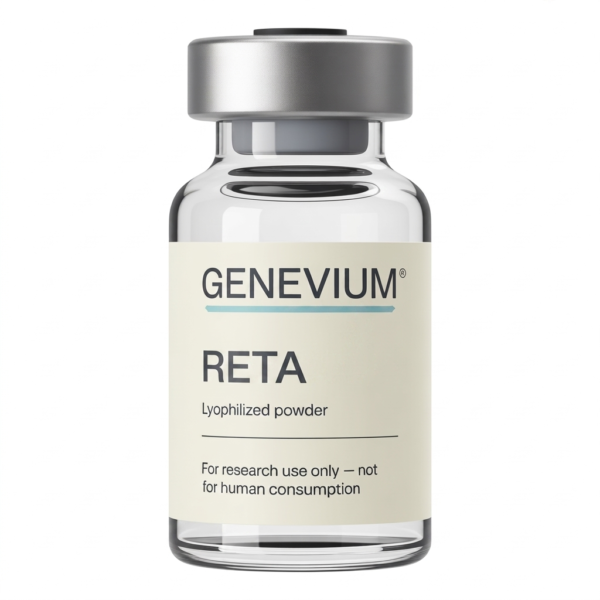
RETA Triple Agonist
Price range: $129.00 through $209.00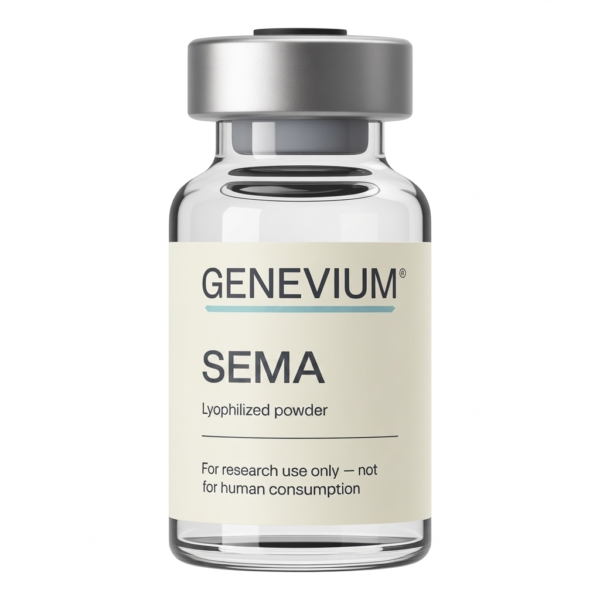
SEMA GLP-1
Price range: $79.00 through $119.00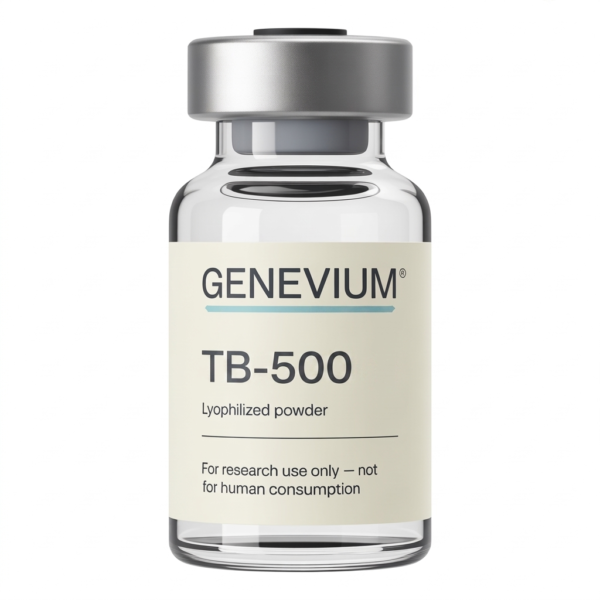
TB-500 10mg
$69.00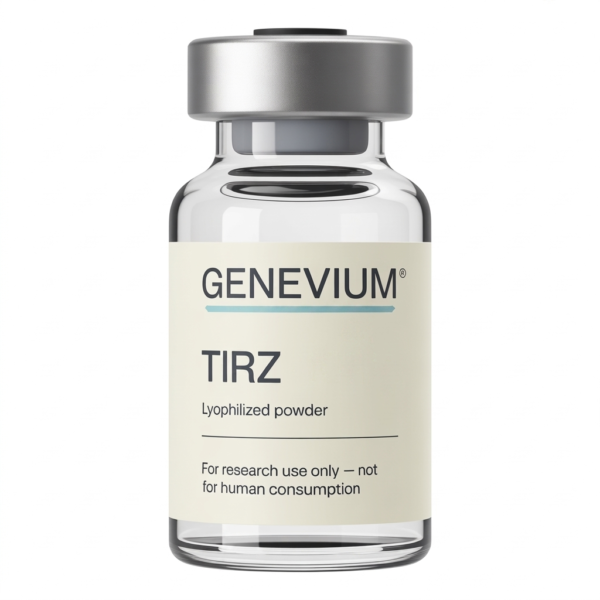
TIRZ GLP-1 / GIP
Price range: $99.00 through $149.00