✓ ≥99% HPLC-verified purity
✓ Third-party tested with batch-specific COA
✓ Available: 10mg,30mg vials
✓ For laboratory research use only

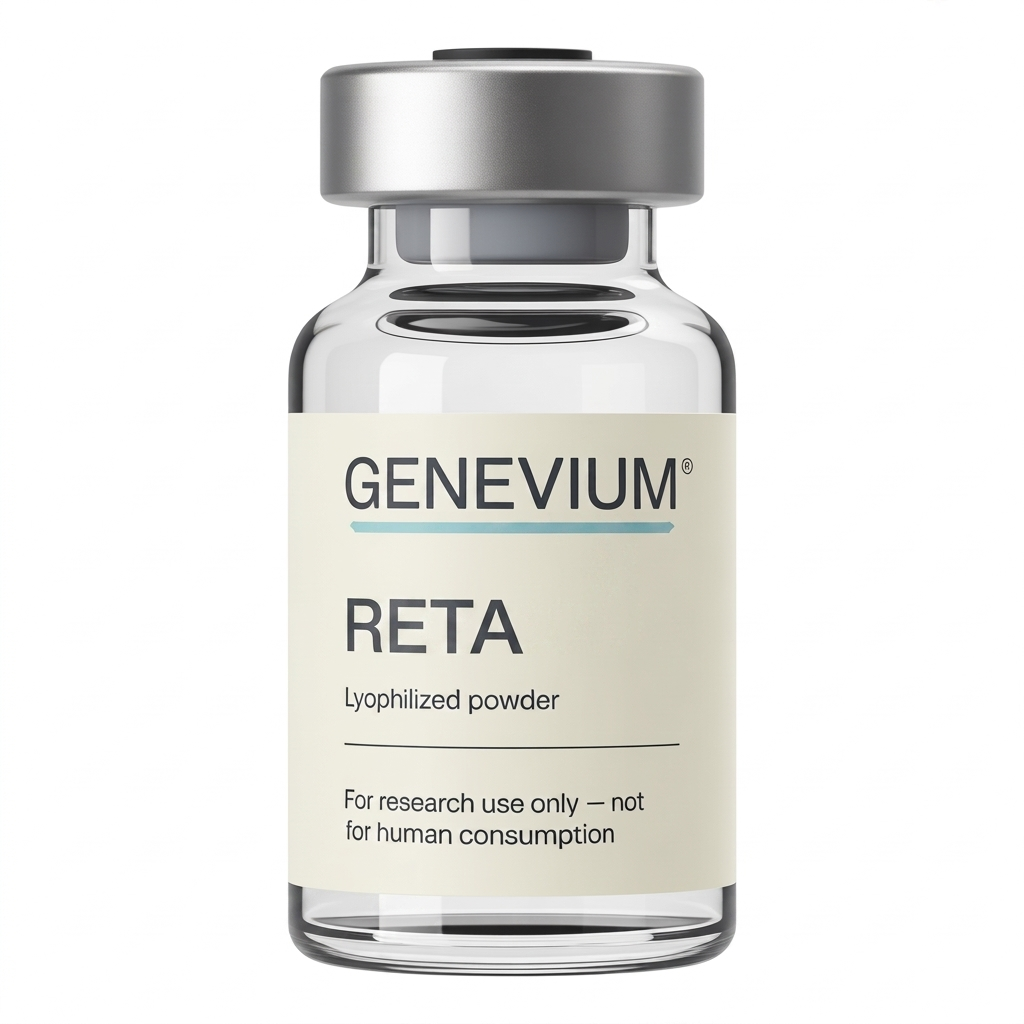
RETA Triple Agonist
Price range: $129.00 through $209.00
RETA Triple Agonist
Research Overview
Retatrutide is a synthetic peptide investigated in metabolic research as a triple receptor agonist. It is supplied as a lyophilized powder in independently sealed sterile vials, allowing investigators to reconstitute material at the point of use according to specific experimental requirements.
This compound is studied across metabolic research models for activity on energy regulation, glucose response, and adipose tissue research. Among the investigational metabolic peptide family, Retatrutide is distinguished by its multi-receptor mechanism, representing the third generation of compounds in this category. Semaglutide acts at GLP-1 alone. Tirzepatide adds GIP for dual incretin engagement. Retatrutide extends further to include glucagon receptor activity, making it the most pharmacologically broad of the three in current research.
For mechanism research, integrated pharmacology, and the published findings on receptor potency balance, energy expenditure, and mitochondrial biogenesis signaling, see Retatrutide Research. For the receptor-linked adverse event profile, dose escalation dependency, and Phase 2 tolerability data, see Retatrutide Side Effects: Research Overview. For comparative research between Retatrutide and the dual-agonist Tirzepatide across receptor pharmacology and pre-clinical model systems, see Tirzepatide vs Retatrutide Comparison.
Mechanism
Retatrutide is engineered to engage three distinct receptor pathways simultaneously: GLP-1, GIP, and glucagon. This triple-agonist mechanism distinguishes it from single-receptor (Semaglutide) and dual-receptor (Tirzepatide) compounds in the same investigational family.
The compound has been studied in peer-reviewed research for its effects on glucose homeostasis, lipid metabolism, and energy regulation in preclinical contexts. Investigators studying metabolic peptide pharmacology design experiments around the hypothesis that simultaneous engagement of GLP-1, GIP, and glucagon receptors produces effects that single- or dual-receptor compounds cannot reproduce, particularly in the energy expenditure and mitochondrial biogenesis pathways that distinguish Retatrutide from earlier-generation compounds.
Product Specifications
- Class: Triple agonist research peptide (GLP-1 / GIP / Glucagon)
- Purity: ≥99% (HPLC verified)
- Testing: HPLC + Mass Spectrometry
- Form: Lyophilized powder
- Container: Sterile vial
- Available Vial Sizes: 10mg, 30mg
- Storage: Refrigerated (2 to 8 degrees Celsius)
- Documentation: Batch-specific COA available
Reconstitution and Storage
Retatrutide is supplied as lyophilized powder in independently sealed sterile vials. Reconstitution is performed by adding bacteriostatic or sterile water to the vial according to the volume protocol used in the specific research application. Reconstitution volume varies by intended working concentration; investigators selecting reconstitution methodology should reference established protocols for their experimental model.
Storage of lyophilized vials at minus 20 degrees Celsius preserves primary structural integrity and biological activity for two to three years for most well-prepared research peptides. Refrigerated storage at 2 to 8 degrees Celsius is acceptable for active inventory expected to be used within months. Once reconstituted, peptides return to aqueous-phase stability constraints and should be used within the documented stability window for the specific compound rather than relying on a generic timeline.
For a detailed treatment of the freeze-drying process, storage temperatures, shelf life expectations, and quality indicators researchers use to assess lyophilized material before reconstitution, see Lyophilized Peptides: Methodology and Stability.
Quality and Verification
Every Genevium batch is independently tested by third-party laboratories. Reverse-phase HPLC confirms purity. Mass spectrometry confirms identity. Nothing ships until the compound clears a 99%+ purity threshold.
A batch-specific Certificate of Analysis is published for every order and is retrievable by batch number on the COA Lookup page. The COA documents purity by HPLC, identity by mass spectrometry, and the analytical conditions under which both were measured.
Third-party analytical verification, public batch-specific COA infrastructure, and documentation traceability are core practices that distinguish research-grade peptide commerce from gray-market pharmaceutical distribution. For the full five-practice supplier integrity framework and the industry context that made these practices essential, see Peptide Sciences Shutdown: Supplier-Side Analysis.
Research Applications
Retatrutide is studied in research contexts where investigators require a multi-receptor metabolic peptide for in vitro receptor activity assays, ex vivo tissue model systems, or pre-clinical animal model research on energy regulation, glucose homeostasis, lipid metabolism, and adipose tissue biology. The triple-agonist mechanism allows investigators to study receptor crosstalk and pathway integration in ways that single- or dual-receptor compounds cannot support, which is the principal methodological reason Retatrutide appears in metabolic peptide research where Semaglutide and Tirzepatide would otherwise be used.
Frequently Asked Questions
How does Retatrutide differ from Tirzepatide and Semaglutide?
Retatrutide engages three receptor pathways simultaneously: GLP-1, GIP, and glucagon. Tirzepatide engages two: GLP-1 and GIP. Semaglutide engages one: GLP-1. The three compounds therefore represent successive generations of metabolic peptide research, with Retatrutide the most pharmacologically broad. For the full comparative research overview, see Tirzepatide vs Retatrutide Comparison.
How is Retatrutide reconstituted for research use?
Bacteriostatic or sterile water is added to the lyophilized vial according to the volume protocol used in the specific research application. Reconstitution volume varies by intended working concentration. Investigators should reference established protocols for their experimental model rather than rely on a generic dilution.
What vial sizes are available?
Retatrutide is offered in two vial sizes for research applications: 10mg and 30mg. Each vial is supplied as lyophilized powder in an independently sealed sterile container, with batch-specific Certificate of Analysis documenting purity and identity for the lot.
How is Retatrutide quality verified?
Each batch is tested independently by third-party laboratories using reverse-phase HPLC for purity quantification and mass spectrometry for identity confirmation. The Certificate of Analysis is retrievable by batch number from the COA Lookup page. Genevium ships nothing below 99% HPLC purity.
For laboratory solution preparation, the reconstitution calculator determines the bacteriostatic water volume required to achieve a target concentration for a given quantity of lyophilized peptide.
Research Use Only. Genevium peptides are intended strictly for laboratory research purposes. Not approved for human consumption, clinical, therapeutic, veterinary, or diagnostic use. Materials are supplied exclusively for qualified research and analytical applications. For the broader regulatory framework that governs research-use-only peptides, see What Research Use Only Actually Means.
| Weight | 0.25 lbs |
|---|---|
| Dimensions | 4 × 4 × 3 in |
| Dosage | 20mg, 30mg, 10mg |
| Purity | ≥99% |
| CAS Number | 2381089-83-2 |
| Molecular Weight | 4731.33 g/mol |
| Storage | Lyophilized powder: store at -20°C, protected from light. Reconstituted: store at 2–8°C, use within 28 days. |
Add a review
Be the first to review “RETA Triple Agonist”
Related products

BPC-157 10mg
$69.00-
TB-500 10mg
$69.00 -
GHK-Cu 100mg
$69.00
Updating…
There are no reviews yet.