✓ ≥99% HPLC-verified purity
✓ Third-party tested with batch-specific COA
✓ Available: 100mg, 3mL vial
✓ For laboratory research use only

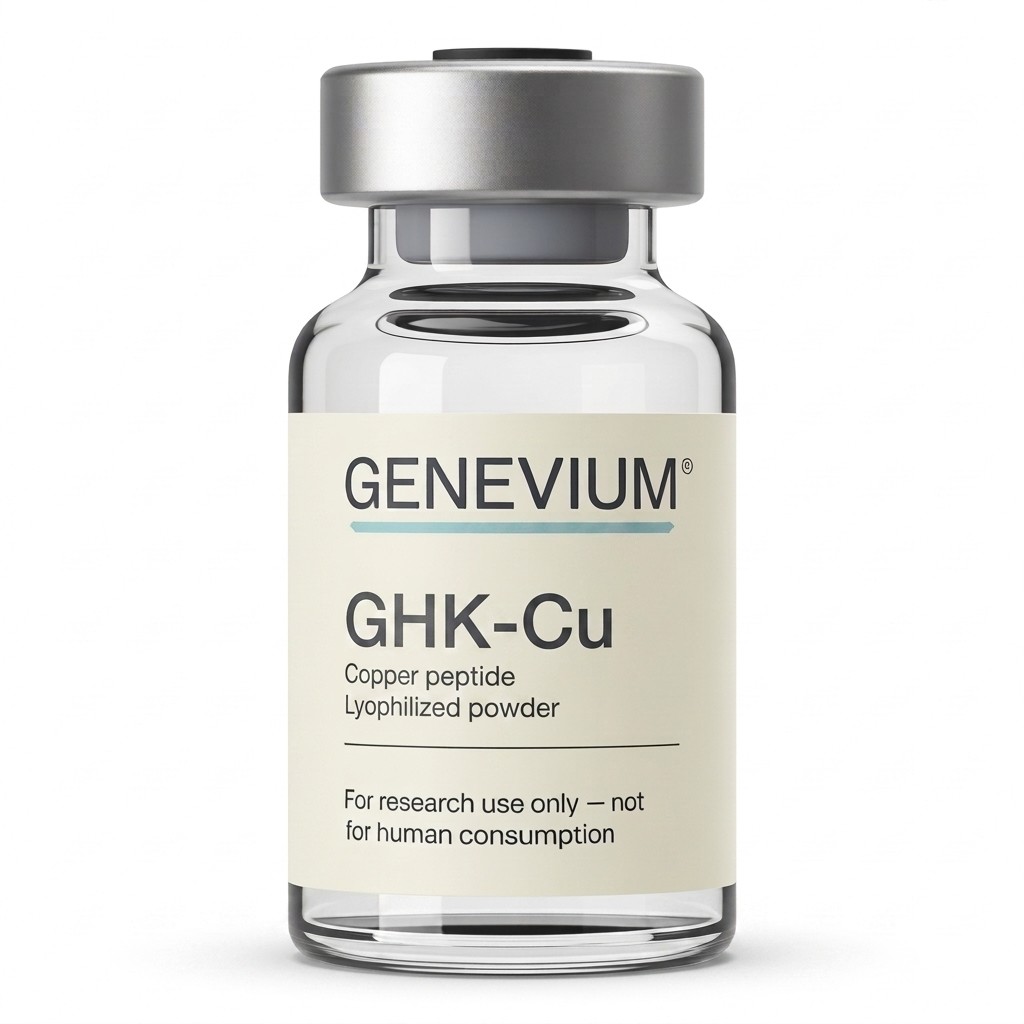
GHK-Cu 100mg
$69.00
GHK-Cu 100mg
Research Overview
GHK-Cu (Glycyl-L-Histidyl-L-Lysine Copper) is a copper-binding tripeptide first isolated from human plasma in 1973 and extensively studied for its role in extracellular matrix biology, dermal fibroblast signaling, and copper-dependent cellular processes. The compound consists of the tripeptide GHK coordinated to a copper(II) ion, producing the characteristic blue-tinted solution observed when reconstituted in aqueous buffer.
This research compound is supplied as a lyophilized powder in a sealed sterile vial, allowing investigators to reconstitute according to specific experimental requirements. GHK-Cu is documented in peer-reviewed literature for collagen and elastin synthesis stimulation, fibroblast activation, anti-inflammatory cytokine modulation, and antioxidant pathway research across dermal model systems.
For broader context on the cosmetic peptide research landscape, see Cosmetic Peptide Research. For the dedicated mechanism of action overview, see GHK-Cu Research.
Scientific Background
GHK-Cu is a tripeptide-copper complex composed of the amino acid sequence Glycyl-L-Histidyl-L-Lysine bound to a copper(II) ion at a one-to-one stoichiometric ratio. The copper coordination is essential to the biological activity profile observed in research models, distinguishing GHK-Cu from the metal-free GHK tripeptide.
Endogenous GHK is present in human plasma at concentrations of approximately 200 ng/mL in young adults, declining with age. The decline correlates with reduced regenerative capacity in dermal and other tissue research models, which has motivated extensive investigation of GHK-Cu as a research tool for studying age-related changes in extracellular matrix biology.
Published research on GHK-Cu spans:
- Collagen and elastin synthesis in dermal fibroblast culture
- Glycosaminoglycan production and extracellular matrix organization
- Anti-inflammatory cytokine modulation
- Antioxidant pathway research and oxidative stress model systems
- Hair follicle research and dermal papilla biology
- Copper-dependent enzymatic studies
For mechanism-of-action research, copper coordination chemistry, and detailed model-system applications, see GHK-Cu Research.
Product Specifications
- Compound: GHK-Cu (Glycyl-L-Histidyl-L-Lysine Copper)
- Sequence: Gly-His-Lys with Cu(II) coordination
- Molecular Weight: 402.9 g/mol
- Format: Lyophilized powder
- Purity: ≥99% (HPLC verified)
- Identity Confirmation: Mass spectrometry
- Container: 3mL sterile vial
- Storage: Refrigerated (2 to 8 degrees Celsius) or frozen (minus 20 degrees Celsius) for long-term
Reconstitution and Storage
GHK-Cu is supplied as lyophilized powder in a sealed sterile vial. Reconstitution is performed by adding bacteriostatic or sterile water directly to the vial according to the volume protocol used in the specific research application. Reconstituted GHK-Cu in aqueous solution exhibits the characteristic blue-to-teal coloration produced by copper coordination, which can serve as a visual confirmation of intact Cu(II) binding.
Storage of lyophilized GHK-Cu at minus 20 degrees Celsius preserves primary structural integrity and biological activity for two to three years. Refrigerated storage at 2 to 8 degrees Celsius is acceptable for active inventory expected to be used within months. Once reconstituted, GHK-Cu returns to aqueous-phase stability constraints and should be used within the documented stability window for the specific research application.
For a detailed treatment of the freeze-drying process, storage temperatures, shelf life expectations, and quality indicators researchers use to assess lyophilized material before reconstitution, see Lyophilized Peptide Methodology.
Quality and Verification
Every Genevium batch is independently tested by third-party laboratories. Reverse-phase HPLC confirms purity. Mass spectrometry confirms identity, including verification of copper coordination. Nothing ships until the batch clears a 99%+ purity threshold.
A batch-specific Certificate of Analysis is published for every vial and is retrievable by batch number on the COA Lookup page. The COA documents HPLC purity, mass spectrometry identity confirmation, and copper content verification.
Research Applications
GHK-Cu supports laboratory research across multiple investigative domains in dermal biology, extracellular matrix research, and copper-peptide signaling. Common research contexts include dermal fibroblast culture for collagen and elastin synthesis studies, hair follicle and dermal papilla research, oxidative stress model systems, anti-inflammatory pathway research, and wound healing model systems where the regenerative properties of copper peptides are characterized at the cellular level.
GHK-Cu is also studied in combination with complementary research peptides in multi-pathway experimental designs. For combination research and methodology rationale, see the Glow Peptide Research overview, which examines GHK-Cu alongside BPC-157 and TB-500 in dermal recovery research.
Frequently Asked Questions
What is the difference between GHK and GHK-Cu?
GHK is the metal-free tripeptide consisting of Glycyl-L-Histidyl-L-Lysine. GHK-Cu is the same tripeptide coordinated to a copper(II) ion at a one-to-one stoichiometric ratio. The copper coordination is essential to the biological activity profile observed in published research, including effects on collagen synthesis, fibroblast activation, and antioxidant signaling. Research models that distinguish between GHK and GHK-Cu typically demonstrate substantially greater activity for the copper-bound complex.
Why does reconstituted GHK-Cu appear blue?
The blue-to-teal color of reconstituted GHK-Cu is produced by the copper(II) coordination complex. Copper(II) ions absorb light in the red and yellow portions of the visible spectrum, transmitting blue and teal wavelengths. The visible coloration serves as a qualitative indicator that copper coordination is intact. Solutions that appear colorless or pale yellow may indicate copper dissociation or compromised material.
What concentrations are typical for GHK-Cu research?
Published research on GHK-Cu in cell culture systems typically uses concentrations in the 1 to 100 micromolar range for fibroblast and dermal model systems. Specific concentrations depend on the research model, endpoint being measured, and experimental design. Researchers should consult the published literature for the specific application being studied.
How is GHK-Cu purity verified?
GHK-Cu is tested independently by third-party laboratories using reverse-phase HPLC for purity quantification and mass spectrometry for identity confirmation. The batch-specific Certificate of Analysis documents the analytical results, including verification of copper coordination. Researchers can retrieve the COA for the specific batch received via the COA Lookup page.
For laboratory solution preparation, the reconstitution calculator determines the bacteriostatic water volume required to achieve a target concentration for a given quantity of lyophilized peptide.
Research Use Only. Genevium peptides are intended strictly for laboratory research purposes. Not approved for human consumption, clinical, therapeutic, veterinary, or diagnostic use. Materials are supplied exclusively for qualified research and analytical applications. For the broader regulatory framework that governs research-use-only peptides, see What Research Use Only Actually Means.
| Dosage | 100mg |
|---|---|
| Purity | ≥99% |
| CAS Number | GHK-Cu: 49557-75-7 |
| Molecular Weight | 403.93 g/mol |
| Storage | Lyophilized powder: store at -20°C, protected from light. Reconstituted: store at 2–8°C, use within 28 days. |
Related products

TB-500 10mg
$69.00-
TIRZ GLP-1 / GIP
Price range: $99.00 through $149.00 -
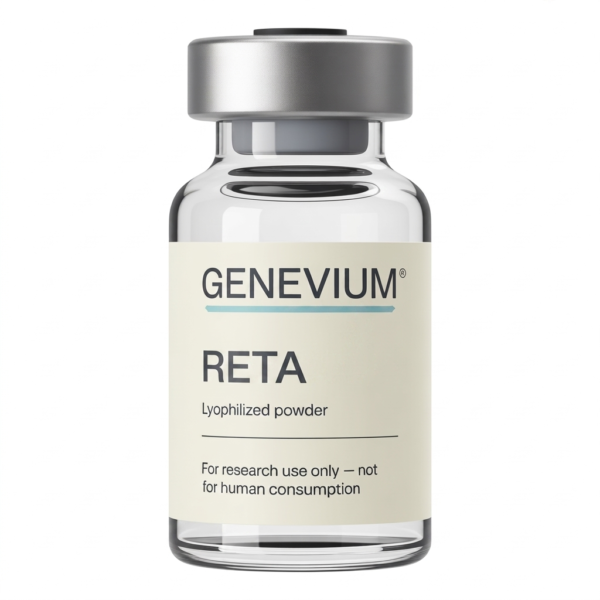
RETA Triple Agonist
Price range: $129.00 through $209.00
Updating…