✓ ≥99% HPLC-verified purity
✓ Third-party tested with batch-specific COA
✓ Available: 10mg vial
✓ For laboratory research use only

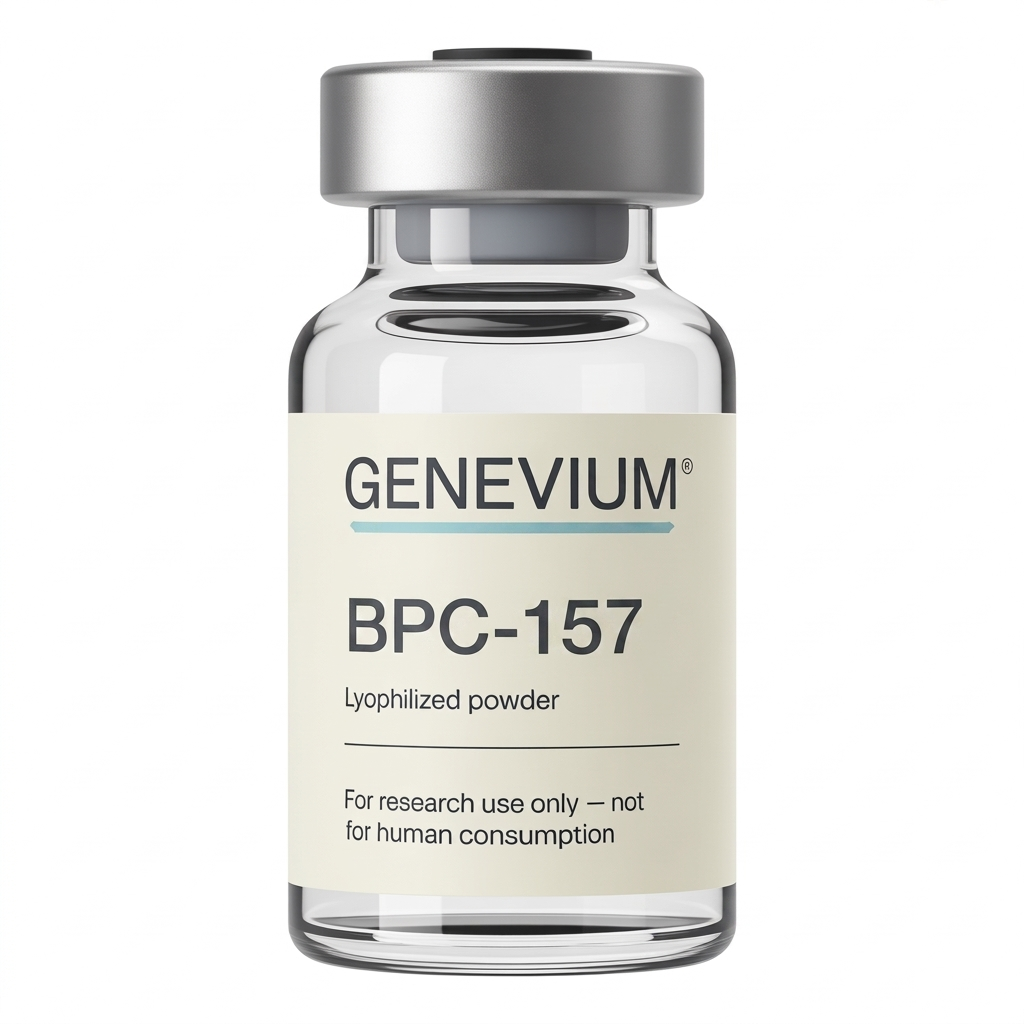
BPC-157 10mg
$69.00
BPC-157 10mg
Research Overview
BPC-157 is a synthetic pentadecapeptide (15 amino acids) derived from a partial sequence of body protection compound, a larger protective protein originally isolated from human gastric juice. It is supplied as a lyophilized powder in an independently sealed sterile vial.
This compound is studied across cytoprotective, gastrointestinal, and tissue research models for its role in cellular signaling, vascular research, and connective tissue research applications. BPC-157 is the most extensively studied tissue-repair peptide in the modern peptide research literature, with published work examining its effects on tendon-to-bone healing, intestinal anastomosis, muscle crush injury, and ligament repair across rodent models.
The peptide is described in the published literature as exhibiting a particularly broad effect profile across tissue types. Studies have examined it in models of tendon, ligament, muscle, bone, vascular, gastrointestinal, and central nervous system contexts. The combination of stability across gastric environments and breadth of investigated applications has made BPC-157 one of the most frequently cited research peptides of the past decade.
For mechanism research and model-system applications, see What Is BPC-157. For comparative research on BPC-157 alongside TB-500, including the methodological basis for combination studies, see BPC-157 and TB-500 Research.
Mechanism
Multiple pathways have been proposed for BPC-157, with the published research identifying several non-exclusive mechanisms. The most consistently documented are angiogenic effects mediated through vascular endothelial growth factor (VEGF) signaling, modulation of nitric oxide synthase pathways, and effects on growth factor receptor expression at sites of tissue injury.
In an in vitro model using rat tendon fibroblast explants, BPC-157 significantly accelerated fibroblast outgrowth and increased fibroblast survival under oxidative stress, alongside dose-dependent enhancement of cell migration in transwell migration assays. In Achilles tendon-to-bone transection studies in rats, BPC-157 administration improved healing across functional, biomechanical, and histological endpoints, including measurable improvements in collagen organization and vascular architecture at the repair site.
Angiogenic effects have been characterized in a series of in vivo studies showing that BPC-157 modulates VEGF expression at injury sites without acting as a direct angiogenic factor on cell cultures alone. This pattern suggests that the angiogenic effect is contextual and tied to active tissue repair rather than to a constitutive direct action on endothelial cells. The peptide is notable for its stability across gastric environments compared to other peptides in its class, which has supported its use in a wider range of research model systems than is typical for peptides of this size.
Product Specifications
- Compound: BPC-157 (Body Protection Compound 157)
- Class: Stable pentadecapeptide
- Purity: ≥99% (HPLC verified)
- Testing: HPLC + Mass Spectrometry
- Form: Lyophilized powder
- Container: Sterile vial
- Available Vial Size: 10mg
- Storage: Refrigerated (2 to 8 degrees Celsius)
- Documentation: Batch-specific COA available
Reconstitution and Storage
BPC-157 is supplied as lyophilized powder in an independently sealed sterile vial. Reconstitution is performed by adding bacteriostatic or sterile water to the vial according to the volume protocol used in the specific research application. Reconstitution volume varies by intended working concentration; investigators selecting reconstitution methodology should reference established protocols for their experimental model.
Storage of lyophilized vials at minus 20 degrees Celsius preserves primary structural integrity and biological activity for two to three years for most well-prepared research peptides. Refrigerated storage at 2 to 8 degrees Celsius is acceptable for active inventory expected to be used within months. Once reconstituted, peptides return to aqueous-phase stability constraints. BPC-157 in solution under refrigeration shows acceptable stability over several weeks based on documented research, which is consistent with the broader cytoprotective peptide literature.
For a detailed treatment of the freeze-drying process, storage temperatures, shelf life expectations, and quality indicators researchers use to assess lyophilized material before reconstitution, see Lyophilized Peptides: Methodology and Stability.
Quality and Verification
Every Genevium batch is independently tested by third-party laboratories. Reverse-phase HPLC confirms purity. Mass spectrometry confirms identity. Nothing ships until the compound clears a 99%+ purity threshold.
A batch-specific Certificate of Analysis is published for every order and is retrievable by batch number on the COA Lookup page. The COA documents purity by HPLC, identity by mass spectrometry, and the analytical conditions under which both were measured.
Research Applications
BPC-157 is studied in research contexts where investigators require a cytoprotective peptide with broad tissue-level activity for in vitro fibroblast and endothelial cell systems, ex vivo tissue explants, or in vivo rodent injury models examining tendon, ligament, muscle, gastrointestinal, or vascular research endpoints. The peptide stability profile and breadth of documented research effects make it a frequent baseline compound in tissue-repair model systems, including methodology development work where researchers benchmark new compounds against established peptide pharmacology.
For laboratory research using BPC-157 alongside TB-500 and GHK-Cu in a single combination formulation, the GLOW-70mg research kit is available with all three compounds supplied as independently sealed lyophilized vials.
Frequently Asked Questions
What is BPC-157 and how does it differ from Body Protection Compound?
BPC-157 is a synthetic 15-amino-acid peptide derived from a partial sequence of body protection compound, the larger protective protein originally isolated from human gastric juice. The synthetic fragment retains key sequence elements of the parent compound while being more economical and accessible for laboratory research. The two are sometimes referenced loosely in the literature, but BPC-157 specifically refers to the synthetic pentadecapeptide used in research model systems.
How is BPC-157 reconstituted for research use?
Bacteriostatic or sterile water is added to the lyophilized vial according to the volume protocol used in the specific research application. Reconstitution volume varies by intended working concentration. Investigators should reference established protocols for their experimental model rather than rely on a generic dilution.
Can BPC-157 be combined with TB-500 in research?
Combination research using BPC-157 and TB-500 is one of the more active sub-areas of recovery peptide work, on the rationale that the two compounds act through complementary rather than overlapping pathways. BPC-157 acts primarily through indirect tissue-level signaling. TB-500 acts directly on the cellular actin cytoskeleton. For the comparative research overview, including methodology considerations specific to multi-peptide protocols, see BPC-157 and TB-500 Research. For a single combination formulation containing both compounds plus GHK-Cu, see the GLOW-70mg research kit.
How is BPC-157 quality verified?
Each batch is tested independently by third-party laboratories using reverse-phase HPLC for purity quantification and mass spectrometry for identity confirmation. The Certificate of Analysis is retrievable by batch number from the COA Lookup page. Genevium ships nothing below 99% HPLC purity.
For laboratory solution preparation, the reconstitution calculator determines the bacteriostatic water volume required to achieve a target concentration for a given quantity of lyophilized peptide.
Research Use Only. Genevium peptides are intended strictly for laboratory research purposes. Not approved for human consumption, clinical, therapeutic, veterinary, or diagnostic use. Materials are supplied exclusively for qualified research and analytical applications. For the broader regulatory framework that governs research-use-only peptides, see What Research Use Only Actually Means.
| Weight | 0.25 lbs |
|---|---|
| Dimensions | 4 × 4 × 3 in |
| Dosage | 10mg |
| Purity | ≥99% |
| Molecular Weight | 1419.55 g/mol |
| CAS Number | 137525-51-0 |
| Storage | Lyophilized powder: store at -20°C, protected from light. Reconstituted: store at 2–8°C, use within 28 days. |
Add a review
Be the first to review “BPC-157 10mg”
Related products

GHK-Cu 100mg
$69.00-
TB-500 10mg
$69.00 -
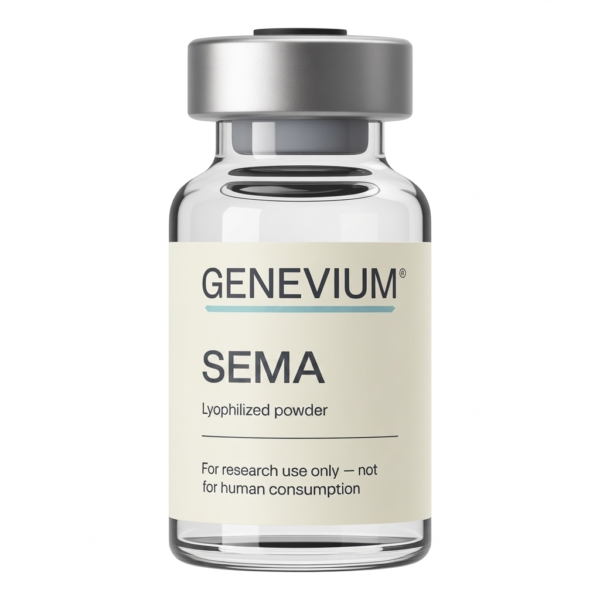
SEMA GLP-1
Price range: $79.00 through $119.00
Updating…
There are no reviews yet.