Skin & Cosmetic Peptide Research
Skin & Cosmetic Peptide Research
Cosmetic peptide research, copper peptide signaling, and dermal biology.
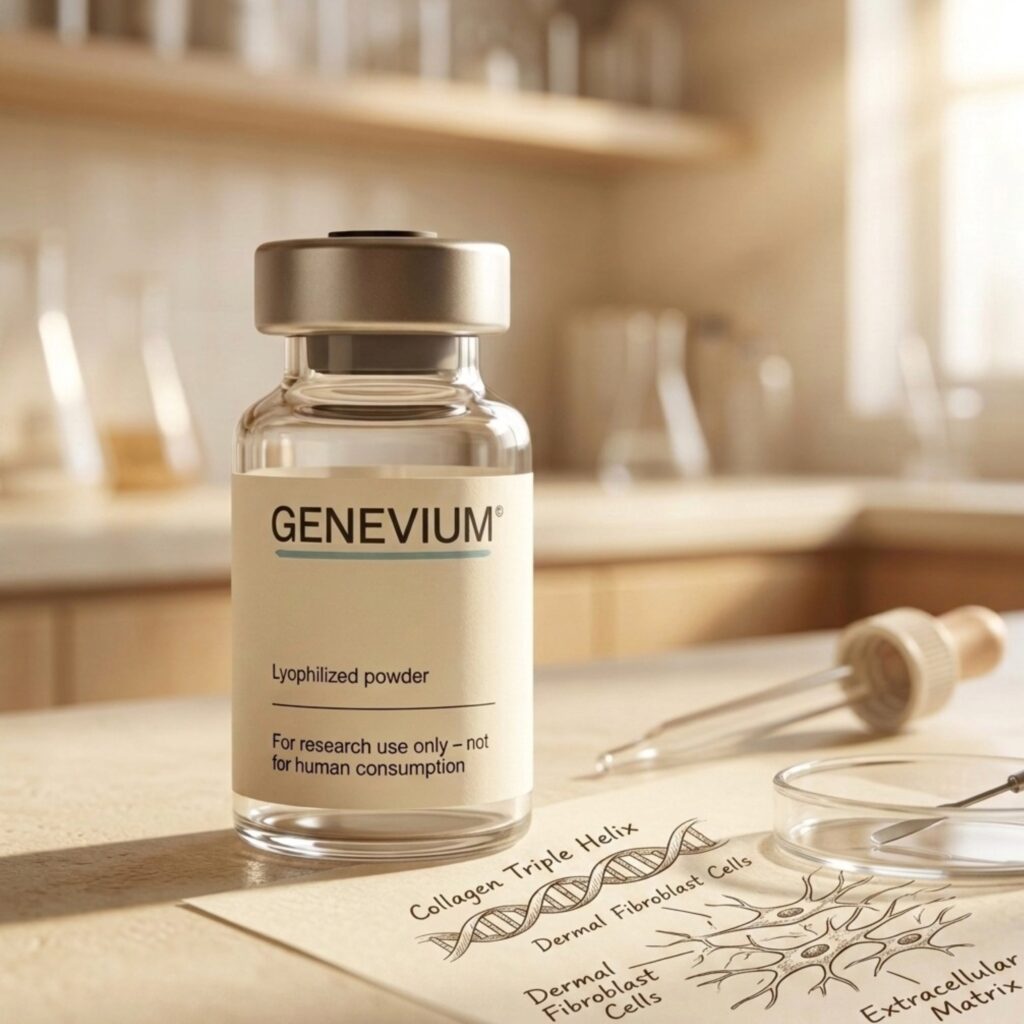
Cosmetic Peptide Research at Genevium
Cosmetic peptide research covers a broad and active area of dermatological science. Compounds in this domain are studied for effects on skin biology, including collagen synthesis, fibroblast signaling, copper-dependent cellular processes, and the inhibition of neurotransmitter release at neuromuscular junctions. The research literature divides cosmetic peptides into four functional categories that operate through distinct mechanisms.
The Skin & Cosmetic category on the Genevium Research Hub organizes this research landscape into signal peptides, neurotransmitter-inhibiting peptides, carrier peptides, and enzyme-inhibiting peptides. Articles in this category cover compound mechanisms, comparative pharmacology of major peptide families, and the formulation and stability considerations that govern rigorous laboratory work with these compounds.
Compound Research
GHK-Cu Research: Copper Peptide Mechanisms and Cosmetic Pharmacology
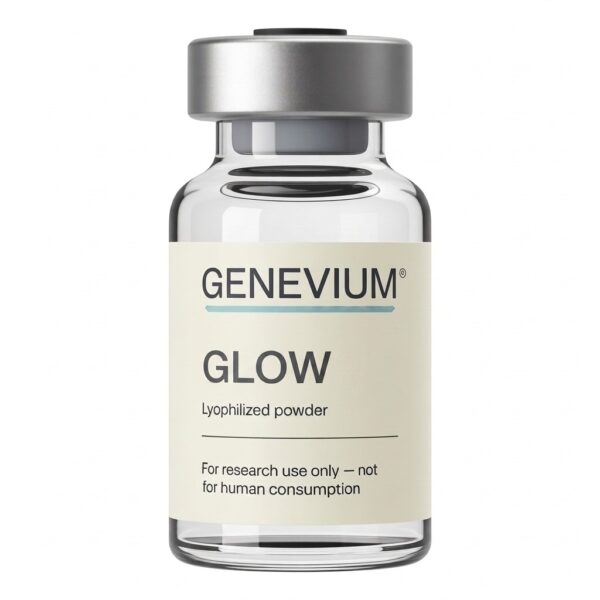
Glow Peptide Research: BPC-157, TB-500, and GHK-Cu in Combination Studies
Comparative Studies
Pharmacology Fundamentals
Cosmetic Peptide Research: A Framework for Skin-Active Compounds
Compounds in This Domain
Cosmetic peptide research covers compounds across four distinct functional categories. Each operates through different mechanisms and serves different research applications in dermal biology.
| Category | Representative Compounds | Research Focus |
|---|---|---|
| Signal Peptides | GHK-Cu, Matrixyl | Cellular signaling effects including collagen synthesis stimulation, fibroblast activation, and dermal extracellular matrix research. |
| Neurotransmitter-Inhibiting Peptides | Argireline, SNAP-8 | SNARE complex formation and the inhibition of neurotransmitter release at the neuromuscular junction in research models. |
| Carrier and Anti-Inflammatory Peptides | GHK-Cu, AHK-Cu, KPV | Copper-carrier delivery to cellular sites involved in tissue remodeling, antioxidant research, and anti-inflammatory cytokine modulation in dermal models. |
| Enzyme-Inhibiting Peptides | Matrix metalloproteinase inhibitors | Inhibition of enzymes involved in collagen degradation pathways relevant to dermal research. |
Quality and Methodology
Cosmetic peptide research is sensitive to compound purity, identity confirmation, and formulation stability. Peptides studied in dermal applications must be characterized for both potency and stability under the conditions relevant to research formulations. Genevium publishes batch-specific Certificates of Analysis for every research peptide, retrievable by batch number on the COA Lookup page.
Beyond laboratory formulation standards, broader interest in cosmetic peptide science has also expanded into advanced aesthetic and skin-focused applications explored by clinics such as Arynova Aesthetics, where regenerative and cosmetic treatment methodologies continue to evolve alongside peptide and dermal biology research.
For full methodology and quality standards documentation, see the Quality and Testing page.
For solution preparation across these compounds, researchers can calculate peptide solution concentration for any lyophilized quantity using the reconstitution calculator on the Research Hub.
Research Peptides Available
For laboratory research applications, Genevium stocks the following research peptides relevant to this category, each with batch-specific Certificate of Analysis and 99%+ purity confirmation by HPLC and mass spectrometry.