✓ USP-grade sterile, 0.9% benzyl alcohol preservative
✓ Third-party tested with batch-specific COA
✓ Available: 30mL multi-dose vial
✓ For laboratory research use only

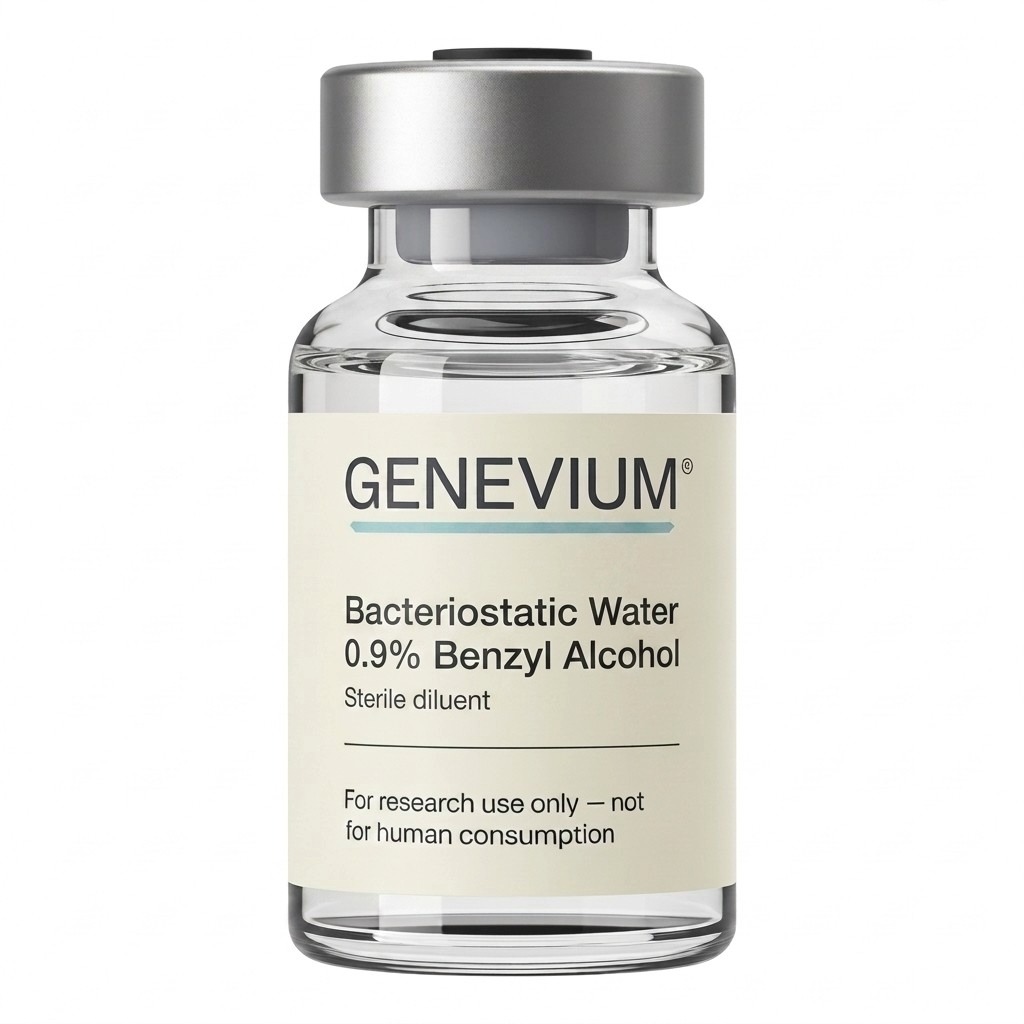
Bacteriostatic Water 10mL
$10.00
Bacteriostatic Water 10mL
Research Overview
Bacteriostatic Water for research applications is sterile water containing 0.9 percent benzyl alcohol as a preservative. It is the standard reconstitution solvent for lyophilized research peptides in laboratory settings, supporting the controlled rehydration of freeze-dried compounds for in vitro and pre-clinical studies.
This product is supplied in a sealed sterile multi-dose vial, allowing researchers to draw the volume needed for each reconstitution while maintaining the sterility of remaining material across multiple uses. The benzyl alcohol preservative inhibits microbial growth in the vial after first use, extending the working life of the diluent across the typical 28-day stability window.
For the methodology behind solution preparation, including target concentration calculations and volume requirements for specific peptide quantities, see the Peptide Reconstitution Calculator. For the broader research peptide methodology framework, see the Lyophilized Peptide Methodology reference.
Scientific Background
Bacteriostatic Water is sterile water for injection compounded with 0.9 percent (9 mg/mL) benzyl alcohol as a bacteriostatic preservative. The composition is established in the United States Pharmacopeia and is the standard formulation for multi-dose reconstitution in research applications.
The benzyl alcohol component inhibits bacterial proliferation through membrane disruption mechanisms while remaining chemically inert toward most peptide compounds at the concentration used. The preservative action distinguishes bacteriostatic water from sterile water for injection, which lacks preservatives and is suitable only for single-use reconstitution.
In peptide research, bacteriostatic water is the standard diluent for compounds intended to be partitioned across multiple experimental sessions. The 28-day usable working life of reconstituted peptide solutions in bacteriostatic water (under refrigeration) corresponds approximately to the documented stability of the benzyl alcohol preservative under typical storage conditions.
Product Specifications
- Composition: Sterile water with 0.9% (9 mg/mL) benzyl alcohol
- Active Preservative: Benzyl alcohol
- Sterility: USP sterile, sealed vial
- Format: Liquid, ready to use
- Container: Multi-dose sterile vial with rubber septum
- pH Range: 4.5 to 7.0
- Storage (unopened): Room temperature (15 to 30 degrees Celsius), protected from light
- Storage (opened): Refrigerated (2 to 8 degrees Celsius), use within 28 days
Reconstitution and Storage
Bacteriostatic Water is supplied as a ready-to-use liquid in a sealed sterile multi-dose vial. To use, withdraw the desired volume through the rubber septum using a sterile syringe and add to the lyophilized peptide vial according to the volume protocol determined for the specific research application.
Storage of unopened bacteriostatic water vials at room temperature (15 to 30 degrees Celsius) preserves stability through the manufacturer-printed expiration date. Once the vial is accessed (rubber septum punctured), the working life is approximately 28 days under refrigeration, after which the bacteriostatic activity may degrade and the diluent should be discarded.
For a detailed treatment of the freeze-drying process, storage temperatures, shelf life expectations, and quality indicators researchers use to assess lyophilized peptide material before reconstitution, see Lyophilized Peptide Methodology.
Quality and Verification
Every Genevium bacteriostatic water vial is supplied from facilities operating under USP standards for sterile compounding. Each batch is tested for sterility, benzyl alcohol concentration accuracy, and pH compliance. Nothing ships until the batch clears USP sterility and composition specifications.
A batch-specific Certificate of Analysis is published for every product and is retrievable by batch number on the COA Lookup page. The COA documents sterility verification, benzyl alcohol concentration, and pH range.
Research Applications
Bacteriostatic Water supports laboratory research wherever lyophilized peptide reconstitution is required. Common research contexts include cell culture studies where peptide compounds are added to growth media, dose-response assays where multiple concentration points are prepared from a single reconstituted vial, comparative parallel-arm experimental designs requiring matched concentrations across treatment arms, and methodology development work where reconstitution conditions are systematically varied.
The multi-dose format supports research workflows that draw partial volumes across multiple experimental sessions, reducing the number of separately reconstituted vials required for extended research projects.
Frequently Asked Questions
What is the difference between bacteriostatic water and sterile water for injection?
Sterile water for injection is preservative-free and is suitable only for single-use applications. Bacteriostatic water contains 0.9 percent benzyl alcohol, which inhibits bacterial proliferation and allows multi-dose use across the typical 28-day working window. For research peptide reconstitution where the reconstituted solution is partitioned across multiple experimental sessions, bacteriostatic water is the standard diluent.
Why is 0.9% benzyl alcohol the preservative concentration?
0.9 percent (9 mg/mL) is the United States Pharmacopeia standard concentration for benzyl alcohol as a bacteriostatic preservative in sterile water. The concentration is established to inhibit bacterial growth across the working life of multi-dose vials while remaining below thresholds associated with chemical interaction effects on peptide stability in research applications.
How long does an opened bacteriostatic water vial remain usable?
Approximately 28 days under refrigeration once the vial septum has been first accessed. The 28-day window corresponds to the documented stability of benzyl alcohol preservative activity under typical storage conditions. After 28 days, the bacteriostatic activity may degrade and the diluent should be discarded rather than relied on for subsequent reconstitutions.
Can bacteriostatic water be used to reconstitute all types of research peptides?
Most research peptides are compatible with bacteriostatic water as the reconstitution solvent. Specific compounds with sensitivity to benzyl alcohol or to pH ranges outside 4.5 to 7.0 may require alternative diluents such as sterile water for injection or specialized buffer systems. Researchers should consult the published literature for the specific peptide being studied.
For laboratory solution preparation, the reconstitution calculator determines the bacteriostatic water volume required to achieve a target concentration for a given quantity of lyophilized peptide.
Research Use Only. Genevium bacteriostatic water is intended strictly for laboratory research purposes. Not approved for human consumption, clinical, therapeutic, veterinary, or diagnostic use. Materials are supplied exclusively for qualified research and analytical applications. For the broader regulatory framework that governs research-use-only materials, see What Research Use Only Actually Means.
| Volume | 10mL |
|---|---|
| Composition | 0.9% Benzyl Alcohol |
| CAS Number | Benzyl Alcohol: 100-51-6 |
| Storage | Unopened: room temperature (15 to 30°C), protected from light. Opened: refrigerate at 2–8°C, use within 28 days. |
Related products

BPC-157 10mg
$69.00-
RETA Triple Agonist
Price range: $129.00 through $209.00 -
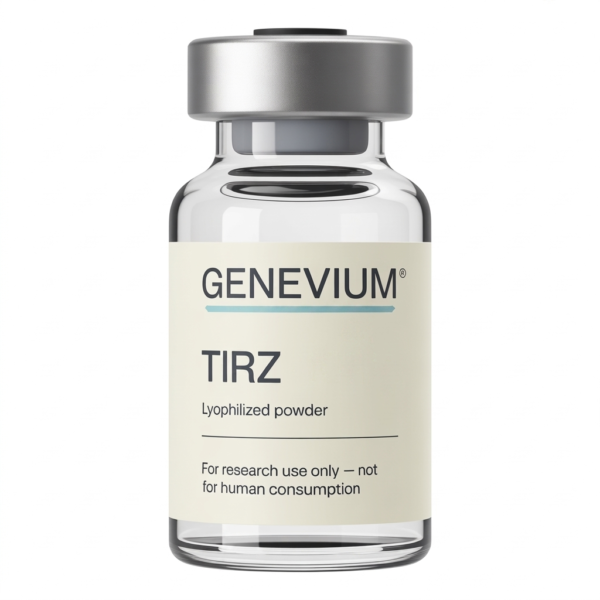
TIRZ GLP-1 / GIP
Price range: $89.00 through $119.00
Updating…